GREENVIEW Roof Windows demonstrate the power of well-chosen details
The roof as the fifth façade
Today’s roof has long ceased to serve a purely protective function. It is increasingly treated as the fifth façade of a building, shaping the proportions, character and the way a house integrates into its surroundings. It is one of the most visible architectural elements, which is why every detail on the roof slope affects the perception of the entire design.
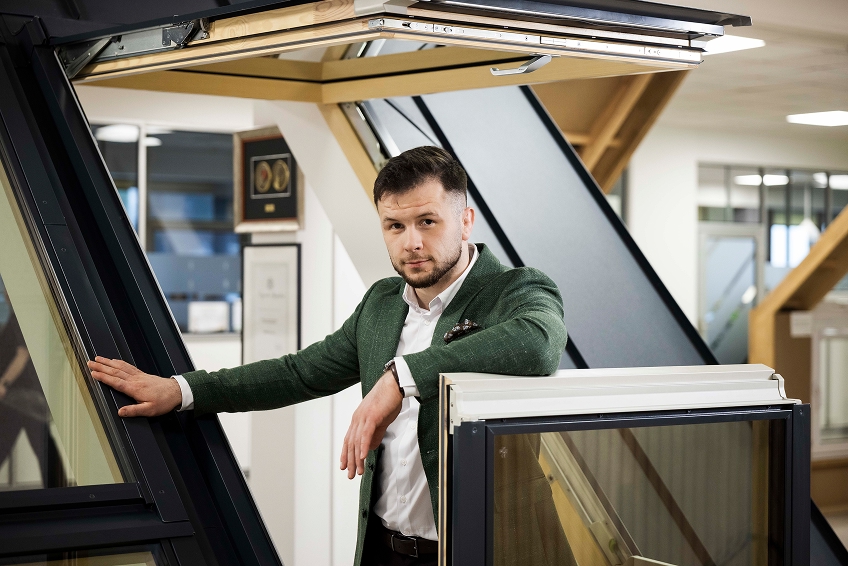
This is particularly evident in roof windows. They are no longer add-ons installed into the roof, but an integral part of it. What matters is not only the glazing itself, but also how the window aligns with the roof line, harmonises with the roofing material, and complements the façade and joinery.
A well-designed roof window should not dominate the roof. It should look as though it has always been a natural part of the house design.
A roof window that doesn’t look like an add-on
When designing GREENVIEW roof windows, FAKRO looked beyond the window parameters alone. The focus was on how the window would co-create the entire roof surface and integrate naturally into the building’s architecture.
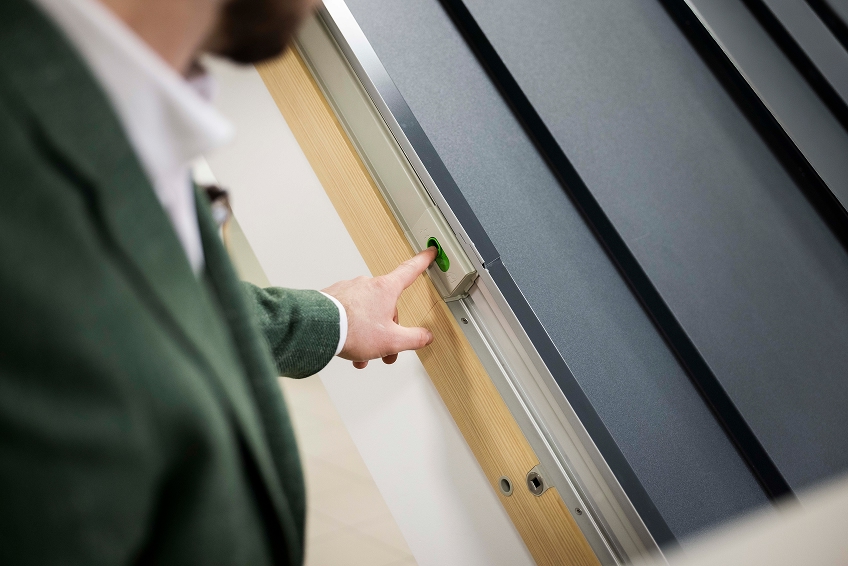
That is why the external flashings were completely redesigned. The new form was developed in collaboration with Instytut Wzornictwa Przemysłowego (the Industrial Design Institute) at the Cracow University of Technology. The aim was to create a calm, minimalist line that does not dominate the roof slope or appear as a late-stage addition.
It is details like these that most often determine how the whole roof is perceived. Well-designed solutions don’t draw attention to themselves individually. They simply make the whole look harmonious and natural. This effect is especially visible when viewing the building as a whole. The flashing lines, proportions, and installation method ensure the roof appears light and contemporary, regardless of the roofing material or glazing size.
Colour that organises the entire roof surface
Colour can completely change how a roof is perceived - especially in modern architecture, where large, uniform roof lines strongly expose every detail.
That is why contemporary designs increasingly rely on restrained, coherent combinations of materials and colours. The roof, joinery, façade and finishing elements create a unified visual system. In this approach, elements that may seem secondary at first glance - such as window flashings or the colour of the flashing kit — play a significant role.
Even a well-designed roof window can disrupt the proportions of a roof if its finish contrasts with the roofing or façade. That is why equal attention was given to colour in the GREENVIEW range.
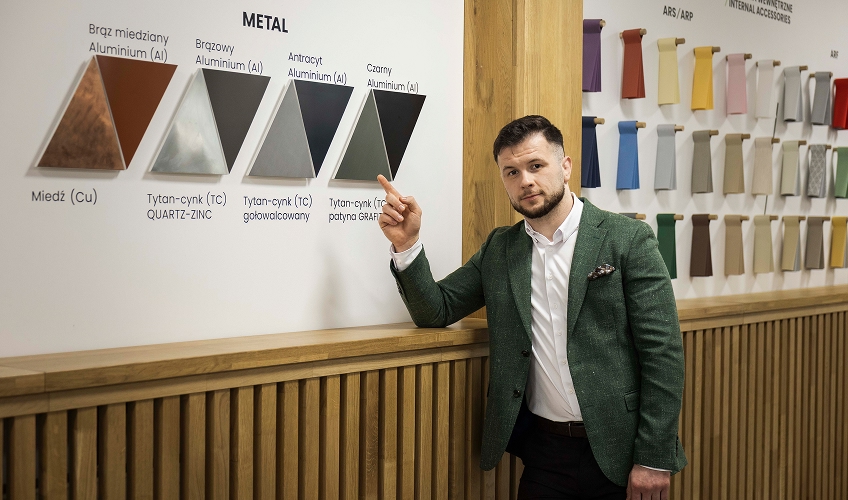
The standard finish is Anthracite Grey (RAL 7016), one of the most widely used colours in modern roofs and joinery. It works well with ceramic and concrete tiles as well as standing seam metal roofs, creating a calm and elegant roof line. It is frequently used in minimalist projects and contemporary homes with simple, geometric forms.
Other available options include Grey Brown (RAL 7022) and Deep Black (RAL 9005). Grey Brown pairs well with more subdued architecture and natural façade materials such as wood, stone or brick, giving the building a softer, more balanced character. Deep Black, in turn, enhances a bold, modern architectural expression, particularly in designs based on strong contrasts and clean forms.
Compatible flashing kits and external accessories are available in matching colours, ensuring all elements visually create a consistent composition on the roof.
Flashing kit – a discreet detail that affects both appearance and durability
This is a detail that is barely visible once installation is complete - yet it is one of the most important elements of the entire roof.
The most critical area is where the window meets the roof slope. This connection determines durability, watertightness and proper drainage of rainwater. The key component here is the flashing kit, responsible for a secure and lasting connection between the window and the roofing.
A well-designed flashing kit should not draw attention to itself. Its role is to make the window appear as though it has always belonged to the roof.
Roofing type matters
Selecting the flashing kit starts with the roofing material. Different solutions are used for profiled tiles, flat tiles, metal panel sheets or shingle-type coverings. Each material has its own profile height and water drainage characteristics, so the flashing must be precisely matched to the specific roof type.
This fit determines whether the window integrates seamlessly with the roof and whether the entire surface maintains a clean, orderly appearance.
Window type requires the right system
The type of roof window is equally important. Different flashing kits are used for centre pivot and top-hung windows, as well as for balcony, terrace or knee wall windows.
In practice, this means the entire system is designed as a comprehensive solution where all elements work together - both technically and visually. As a result, the window does not look like an added component, but becomes a natural part of the roof architecture.
Installation depth shapes the roof’s appearance
The way the window is installed in the roof also plays a role. FAKRO systems offer three installation depths:
- N (+3 cm)
- V (0)
- J (-3 cm)
Deeper installation allows for better integration with the roof, reduces the visibility of installation elements and creates a more refined, modern look. It also improves airtightness and the thermal performance of the structure.
Standard or Thermo
Once the roofing type, window type and installation depth are defined, the flashing option can be selected. Standard solutions already provide a durable and watertight connection, supporting proper water drainage and helping to reduce heat loss around the window.
Thermo flashing kits are additionally equipped with insulation material, further improving the thermal performance of the connection and reducing the risk of thermal bridges.
Finally, the colour of the flashing kit is matched to the external flashings of the roof window to ensure a consistent appearance across the roof.
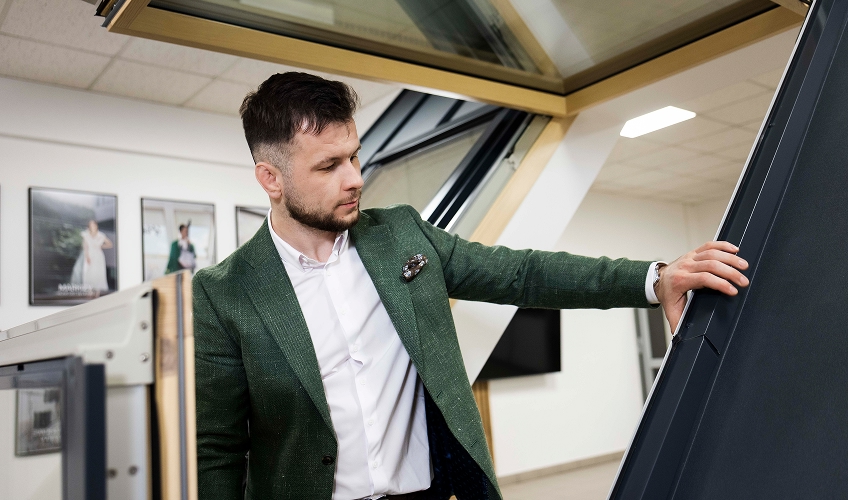
External awning blinds and roller shutters
A modern roof should not only look good but also ensure comfort throughout the year. Larger glazing areas in attics provide more natural light and a greater sense of space, but they also require effective protection against overheating in summer, heat loss in winter and external noise.
That is why external accessories are increasingly designed not as separate add-ons, but as an integral part of the roof window system. The most effective approach is to block solar radiation before it reaches the glass.
This is the role of the AMZ Komfort awning blind, which reduces the amount of solar energy entering the interior while maintaining natural light and outside visibility. As a result, the attic remains bright and comfortable even in strong sunlight.
This solution works particularly well in modern attic designs that embrace large glazed areas as part of the interior architecture.
Another option is the ARZ Komfort external roller shutter, which offers an even higher level of protection. When closed, it effectively darkens the interior, improves thermal insulation in winter and reduces external noise, such as street traffic.
In contemporary architecture, comfort is understood more broadly than just temperature. It also includes light quality, acoustics and the ability to create a calm, functional living space.
Well-matched external accessories therefore become a natural complement to modern roof windows. All solutions are designed as part of one system, ensuring consistency with the window, its flashings and the overall roof architecture.
A roof where everything works together
A well-designed roof is not a collection of random elements. It is a coherent structure in which every detail influences the final effect.
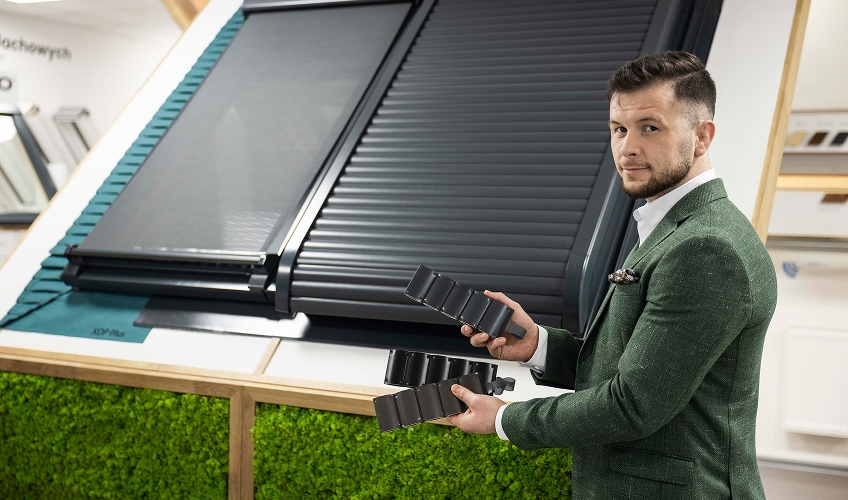
In the case of GREENVIEW roof windows, it is not only the window itself that matters, but also the correctly selected flashing kit, installation method, colour scheme and compatible external accessories.
In a well-designed home, everything should work together. Just like in a carefully composed outfit, it’s the details that define the final result. A roof does not need random additions - it needs consistency.