Share
Net-zero energy home in the suburbs of Virginia
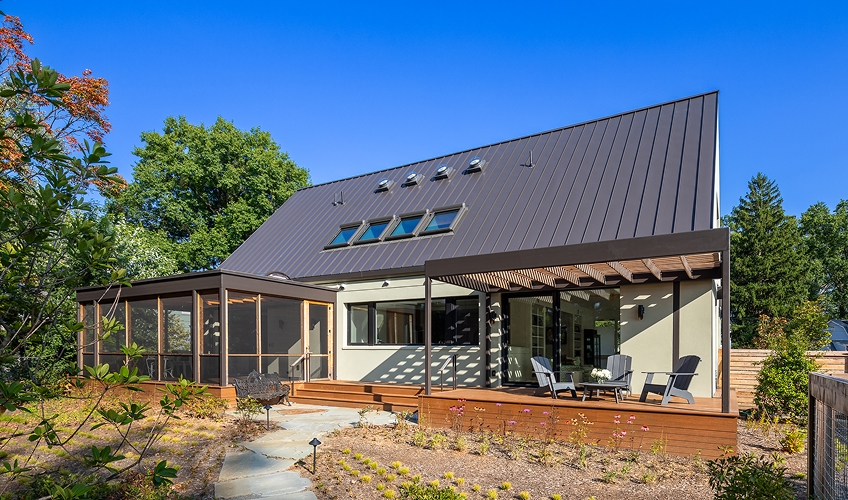
In an era of rapid climate change and growing environmental concerns, net-zero energy construction is gaining particular importance. Homes of this type are designed to balance energy consumption with on-site energy production, mainly through well-thought-out architectural solutions and the use of renewable energy sources.
Sustainable construction
In the small town of Vienna, Virginia, USA, a home has been built that perfectly embodies the principles of sustainable construction. The design aimed to create a fully passive building that uses efficient energy management and appropriate daylighting.
These plans have been successfully implemented. The building generates enough solar energy to cover its annual demand, including both everyday use and the charging of an electric vehicle. Additionally, it is capable of producing energy surpluses, highlighting its self-sufficient character.
This is confirmed by numerous certifications obtained in this area, including: Phius ZERO 2021 Design Certified, EPA ENERGY STAR Homes, EPA Indoor airPLUS, and DOE Zero Energy Ready Home.
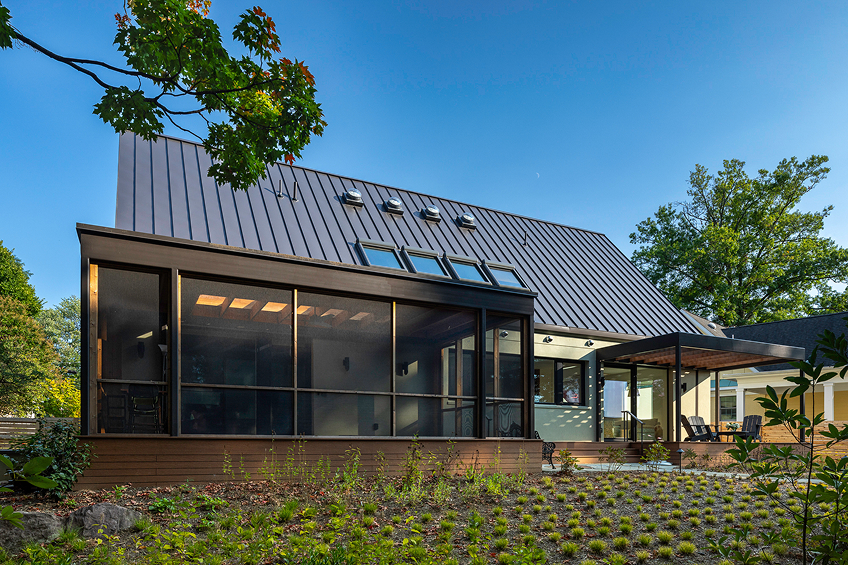
FAKRO roof windows – a solution for every home
In addition to implementing solutions such as a heat pump and a photovoltaic system, roof joinery played an important role in the project. It enables optimal use of daylight while ensuring energy efficiency and a high level of comfort. The installed FAKRO roof windows are wooden models: electrically operated FPP MAX Z-Wave and fixed FNP windows.
The very choice of material reflects a close connection to nature. Pine wood, finished with a clear water-based lacquer, creates a friendly indoor microclimate, adds warmth, and enhances the homely character of the space.
The FPP MAX model is a top-and-pivot roof window that, in the Z-Wave version, significantly enhances everyday comfort. This solution allows convenient operation via remote control.
FNP windows are fixed (non-opening) models - three of them were used in this project. Their main function is to provide natural daylight. Their design enables the use of larger glazing units, which are not achievable in opening windows.
Daylighting
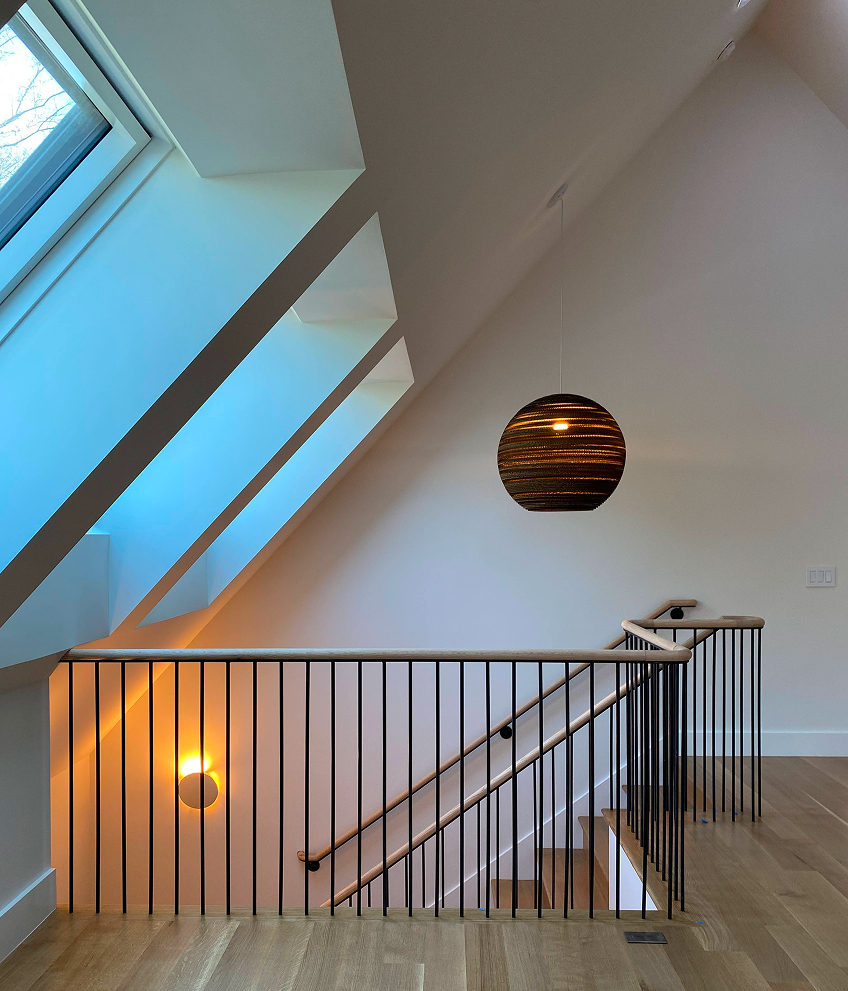 The roof windows were installed along the circulation route connecting the ground floor with the attic. The goal of this solution was to effectively illuminate a part of the house that often lacks access to traditional vertical windows. Natural light entering from above keeps this space bright for most of the day, eliminating the need for artificial lighting.
Additionally, this allowed the space to be functionally adapted as a relaxation area. The result is not only improved comfort and a visually enlarged space, but also reduced energy consumption, fully aligned with the principles of sustainable construction.
External roller shutters supporting energy efficiency
The building was also equipped with external accessories for roof windows - ARZ roller shutters. Installed on the outside, they effectively protect interiors from overheating by stopping solar radiation before it reaches the glazing. This prevents excessive heat build-up inside.
Such a solution supports energy efficiency: interiors maintain a comfortable temperature, reducing the need for air conditioning and, consequently, lowering energy consumption.
This home in Virginia is an excellent example of net-zero energy construction, confirming the quality of the technologies used and a responsible approach to the natural environment.
Project details
Building type: single-family house
Location: Vienna, Virginia, USA
Architect: David Peabody, Peabody Fine Architects
FAKRO products used
Roof windows: FPP MAX Z-Wave and FNP
External roller shutters for roof windows: ARZ


