ENVIRONMENTAL PRODUCT DECLARATION (EPD)
Progressive climate change is prompting an increasing number of industries to take action aimed at mitigating its adverse effects. This also applies to the construction sector which, according to analyses, accounts for more than one third of CO₂ emissions in Poland. One way to reduce the negative environmental impact of the construction industry is to use building products whose production and use affect the natural environment and climate as little as possible.
FAKRO products respond to growing market and user expectations regarding transparent reporting of the environmental impact of products. Confirmation of these initiatives is FAKRO’s obtaining environmental product declarations for its products.
WHAT IS EPD?
Environmental Product Declarations, known as EPD (Environmental Product Declaration) or Type III declarations, are verified documents that define the degree of a product’s environmental impact throughout its entire life cycle - from raw material extraction, through production, transport, installation and use, to disposal and recycling. The basis for preparing an EPD is a Life Cycle Assessment (LCA). An EPD also presents the Global Warming Potential (GWP) indicator, which expresses the total greenhouse gas emissions attributed to a product, calculated as CO₂ equivalent and referred to as the product’s carbon footprint.
Environmental declarations therefore function as product information sheets that clearly present their environmental impact at individual stages of the life cycle. Such documentation constitutes a clear signal to Partners that FAKRO - a socially and environmentally responsible company - focuses on reducing CO₂ emissions, ensuring optimal use of raw materials during production, and the rational use of resources such as energy and water.
Choosing products with an EPD allows investors and developers to obtain additional points in green building certification processes such as BREEAM or LEED. Moreover, these declarations increase transparency by providing reliable data on a product’s environmental impact, verified by independent bodies.
HOW DOES THIS LOOK AT FAKRO?
By choosing FAKRO products, customers gain not only comfort of use, functionality and aesthetic design, but also access to information about the environmental impact of the products. Environmental Product Declarations (EPD) cover the following product groups: timber and aluminium–PVC roof windows, flat roof windows, roof access windows, flashing systems, external window accessories, and timber and metal attic ladders.
Based on the declarations (available for download on the FAKRO website https://www.fakro.com/information-about-the-company/epd-declarations), it is possible to obtain information on specific environmental impact categories for individual products. As a result, individual customers gain satisfaction from choosing a brand whose values and operational policies align with their own principles. Investors, in turn, receive products that meet technical requirements and support the assessment of a building’s environmental impact, enabling the implementation of projects in line with sustainable construction principles.
FAKRO incorporates environmental aspects already at the product design stage. Raw materials used in production are sourced from responsibly managed resources. Timber roof windows are manufactured from pine wood certified by FSC, meaning that forest resources are harvested sustainably, at levels that allow for natural regeneration. Logistics processes and supply chains are analysed in accordance with FAKRO’s internal environmental and social standards.
In the manufacturing process, FAKRO consistently uses recycled materials, supporting the concept of a circular economy. An example is the reuse of waste generated during the production of aluminium–PVC windows. This waste is processed by a company specialising in the manufacture of plastic profiles and converted into PVC profiles, which are then reused by FAKRO as raw material for frame production. This approach minimizes waste and supports sustainable development.
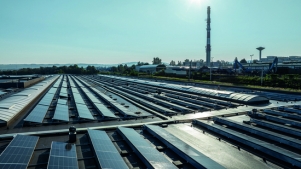
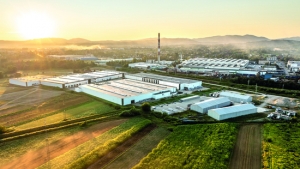
FAKRO also uses energy from renewable sources. A photovoltaic installation located on the roofs of production halls generates electricity with a capacity of approximately 2105 kWp (data for 2024). Biomass in the form of energy willow is also used for heating buildings. A 35-hectare plantation established near the company’s headquarters enabled the use of 429 Mg of energy willow in 2025.